What is Hikikomi?
Sep 28, 2026 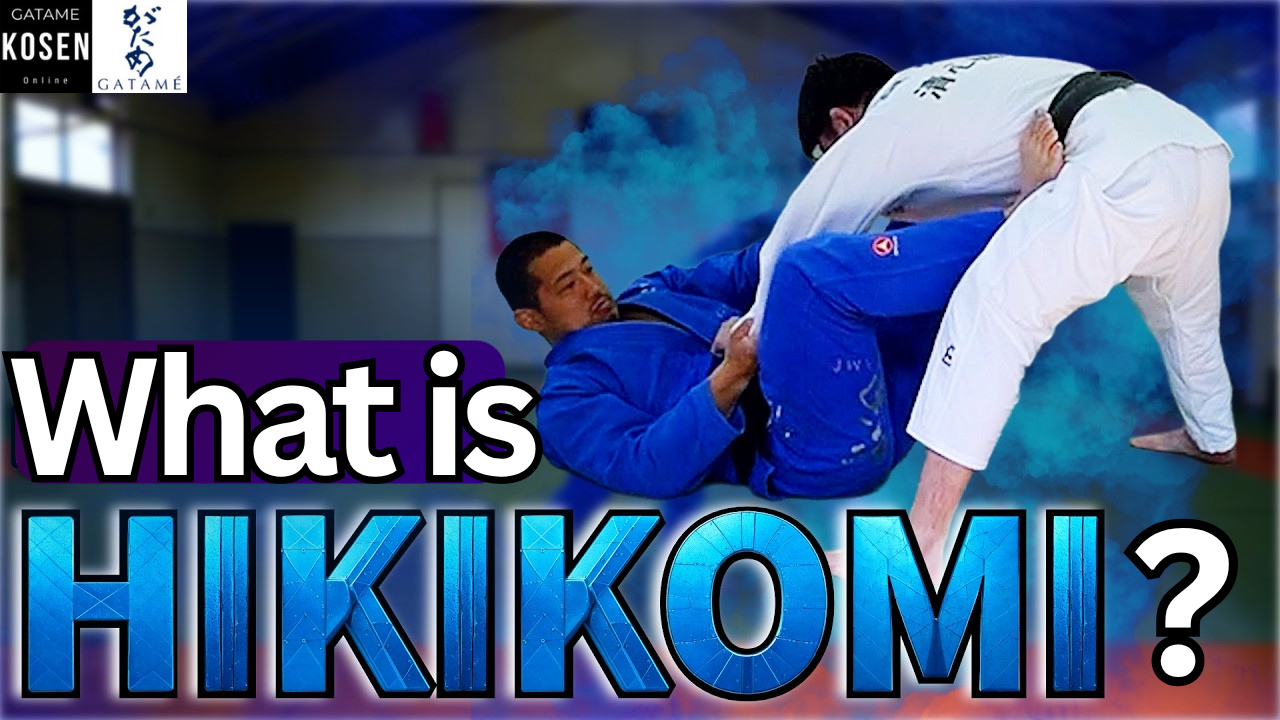
1. What Is Hikikomi?
Hikikomi (引き込み) refers to going from a standing position into a pull-guard position. It generally means intentionally bringing your opponent into groundwork rather than trying to score with a conventional throw.
Hikikomi has an especially important connection with Kosen Judo, where competitors had much more freedom to enter ne-waza.
2. What Does “Hikikomi” Mean in Japanese?
The Japanese word Hikikomi (引き込み) can be broken down into:
引き (Hiki) = pulling
込み (Komi) = bringing or drawing in
3. Why Was Hikikomi Important in Kosen Judo?
Some students started Judo only after joining a Kosen school Judo team. For these students, ne-waza was often much faster to improve than tachi-waza.
They also had to compete in 15-vs-15 team matches. It was difficult for students who started Judo later to compete in tachi-waza against opponents who had practiced Judo since they were young.
Because of this, many students who started Judo later used Hikikomi to bring their opponents into ne-waza, where they had a better chance to compete.
Under Kosen Judo rules, a competitor had to win by Ippon to stay in the match and fight the next opponent. Some students who started Judo later aimed for a draw by using Hikikomi and fighting in ne-waza. This strategy made it easier for them to draw against experienced opponents than fighting mainly in tachi-waza.
4. Was Hikikomi Always Allowed in Judo?
Yes. In the early days of Judo, Hikikomi was allowed. Until 1925, Kodokan Judo and what later became known as Kosen Judo competed under essentially the same rules.
However, the Kodokan wanted practitioners to develop and improve their tachi-waza (standing techniques). In 1925, the Kodokan changed the competition rules so that matches had to begin from tachi-waza. Before this change, competitors could begin directly from ne-waza.
Under the new rules, performing Hikikomi three times resulted in hansoku-make (disqualification).
Kosen Judo competitions, however, did not adopt these new Kodokan rules. They continued using the older rules, which allowed greater freedom to enter ne-waza through Hikikomi.
This older ruleset became the foundation of what we now call the Kosen Judo rules.
What is Gatame Kosen?
Gatame Kosen is a modern judo curriculum inspired by traditional Kosen Judo. It preserves traditional techniques and ne-waza while providing a simple, enjoyable ruleset that can be practiced by judoka and grapplers around the world.
Why Does Gatame Kosen Exist?
Gatame Kosen was inspired by the philosophy and competition rules of traditional Kosen Judo.
Our mission is not to replace Kodokan or IJF Judo, but to preserve an important part of judo history while making its unique ne-waza accessible to practitioners around the world.
1. Preserve Traditional Techniques
Many techniques once used in Kosen Judo are no longer allowed in modern IJF competition.
Gatame Kosen helps preserve and teach techniques such as:
- Morote-gari (Double-leg Takedown)
- Kuchiki-daoshi (Single-leg Takedown)
- Standing submissions
- Ude Tori Gaeshi
- Other traditional techniques and tactical systems
2. A Simple and Enjoyable Ruleset
Inspired by the original Kosen Judo rules, our ruleset encourages continuous action and technical ne-waza.
It is designed to be easy to learn, enjoyable to practice, and suitable for judoka and grapplers of all experience levels.
3. Make Kosen Judo Accessible Worldwide
For many years, learning authentic Kosen Judo required traveling to Japan.
Gatame Kosen provides a structured curriculum that allows practitioners around the world to learn traditional Kosen Judo concepts, techniques, and history—anytime, anywhere.
Don't miss a beat!
New moves, motivation, and classes delivered to your inbox.
We hate SPAM. We will never sell your information, for any reason.
